this for escaping w3 validation warning
hide
Rational:
Climate change is no longer a distant environmental concern; it is a lived reality shaping health, livelihoods, gender equality, and survival especially for marginalized communities. Rising temperatures, erratic rainfall, floods, droughts and ecosystem degradation are intensifying health risks such as malnutrition, waterborne diseases, heat stress, while also contributing to loss of income and deepening gender inequalities.
These risks heighten vulnerabilities, felt most acutely by women and children across geographies – from rural Mewat (Nuh) in Rajasthan to the tribal belts of Mayurbhanj in Odisha and urban slums of Mumbra in Thane, Maharashtra. Yet these challenges also reveal strong resilience among women.
Women and girls are often the first to experience climate shocks, yet they are also emerging as local climate champions—identifying risks, mobilizing communities and driving solutions that protect health and livelihoods. Placing women at the centre of climate action is therefore not only a matter of equity, but essential for building resilient communities.
The Research:
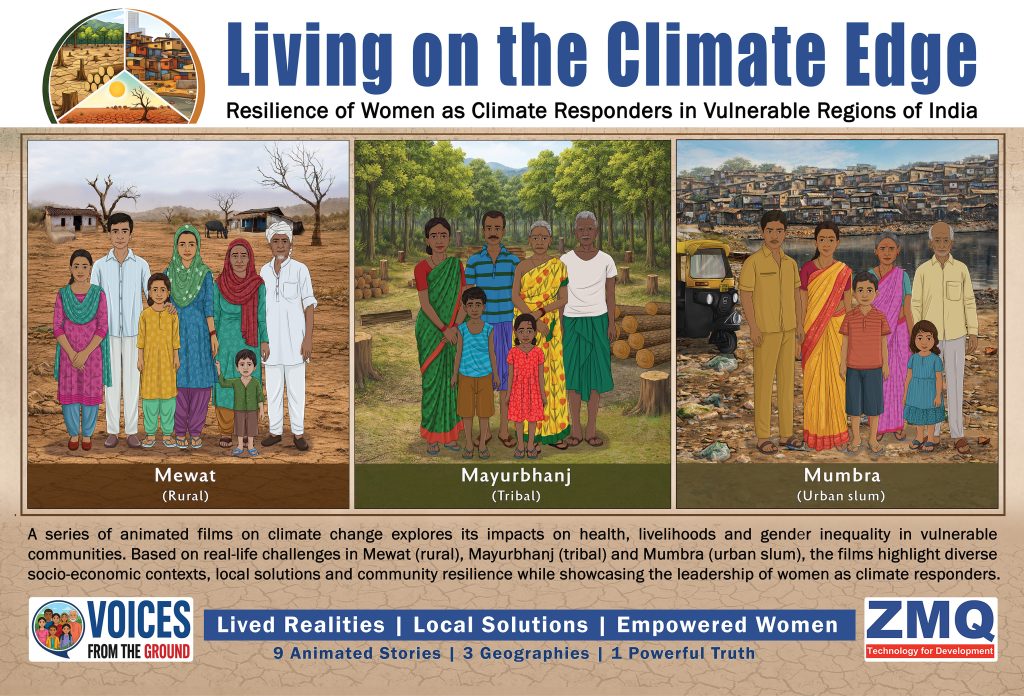
Research was conducted across three demographic settings in India – rural areas, tribal communities and urban slums to assess the impact of climate change on health, examine its effects on livelihoods and understand its gendered impacts. The three areas of research are:
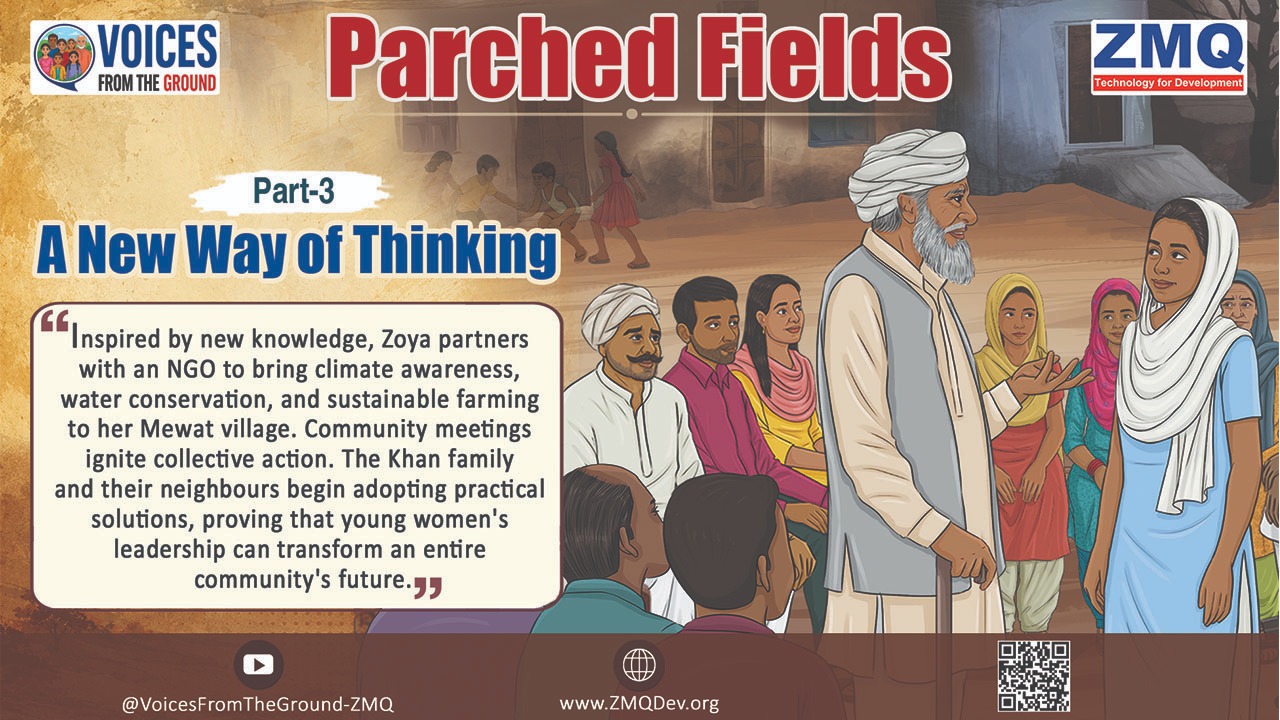
- Rural: Mewat (Nuh), Haryana — agrarian economy, water scarcity, limited services.
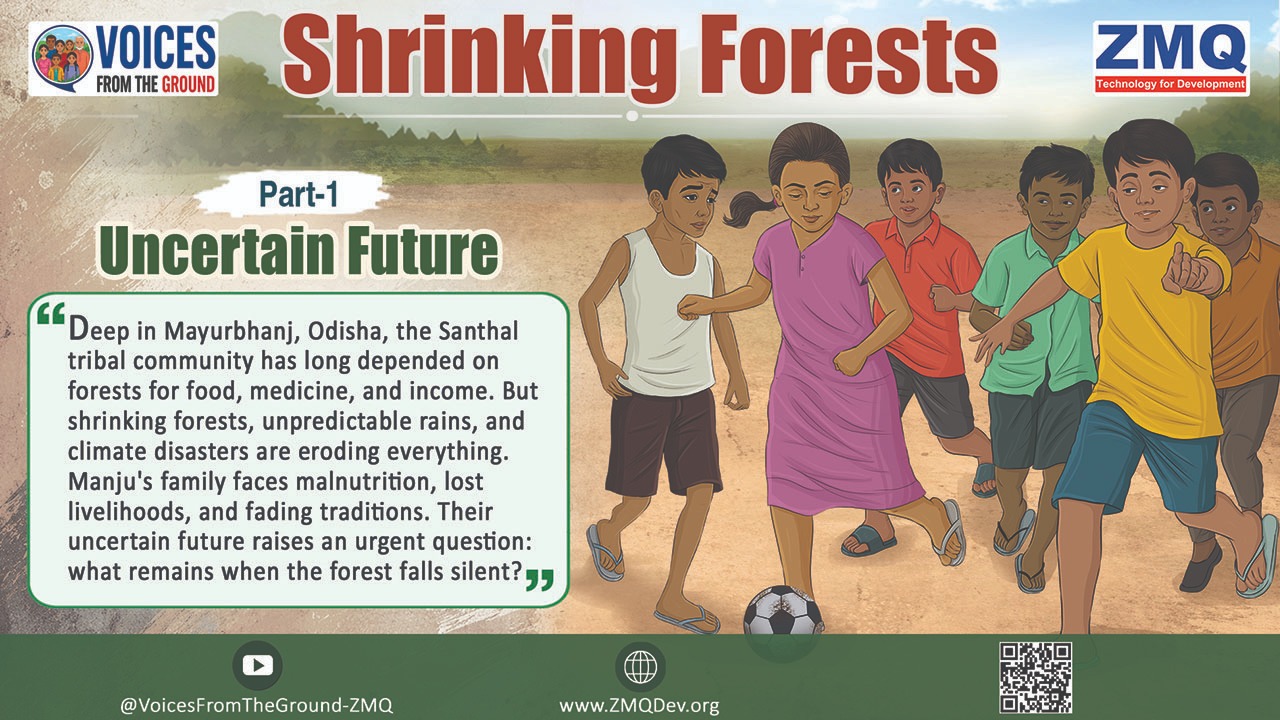
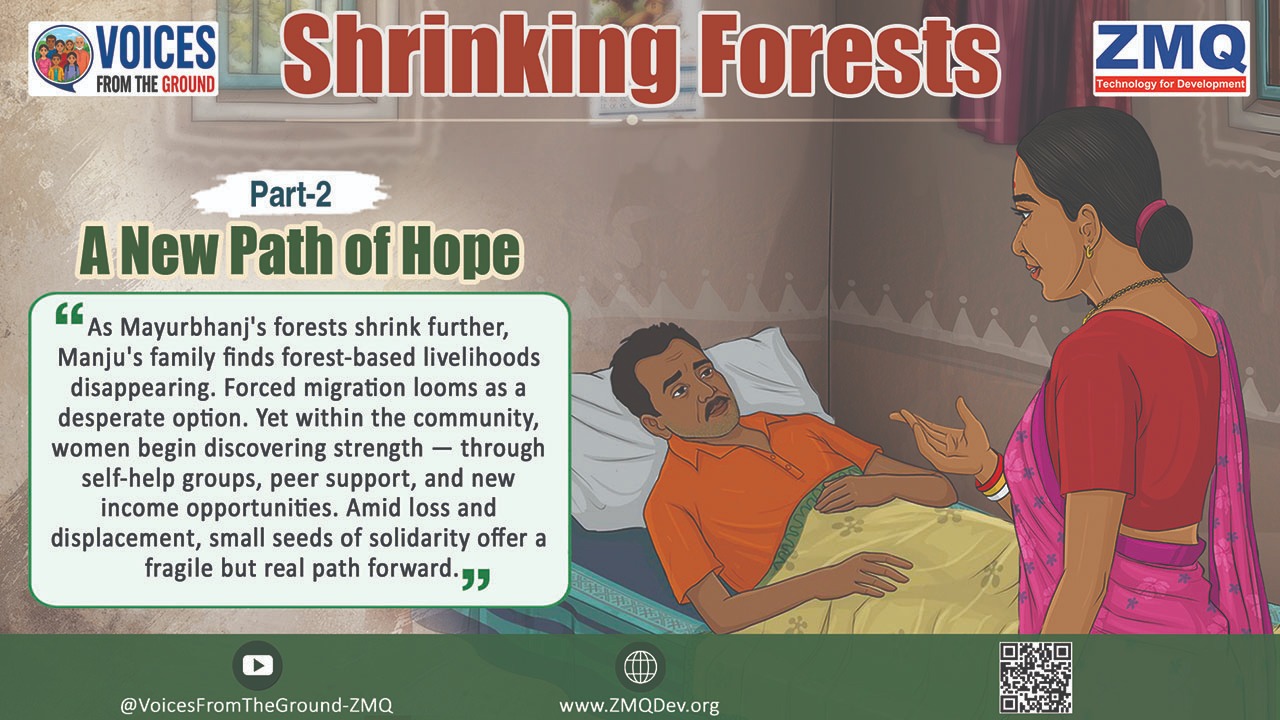
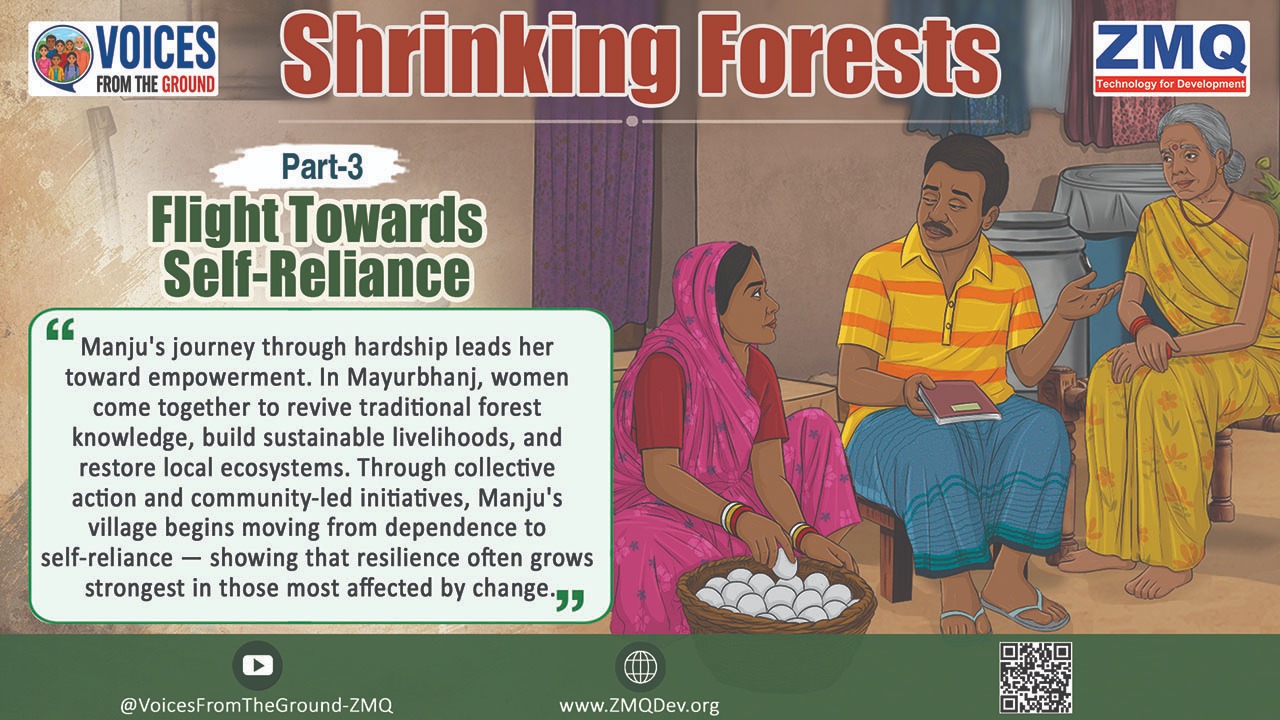
- Tribal: Mayurbhanj, Odisha — forest-dependent communities, remoteness, indigenous food systems.
- Urban Slum: Mumbra (Thane), Maharashtra — high density, informal livelihoods, poor water and sanitation.
Research findings were translated into a storytelling framework across each geography: the problem, the climax, and the response. This structure transformed complex climate and health data into narratives reflecting lived community experiences. Each film shows the following:
- The Problem: Disruption of health and livelihoods due to climate change
- The Climax: Crisis faced by families and communities
- The Response: Locally rooted solutions led by women emerging as climate champions
Using this narrative framework, the research insights were developed into a series of nine short animated films, each set in a different vulnerable geography. Together, the films form the Living on the Climate Edge festival presenting powerful stories of resilience, adaptation and community-led solutions, where local women emerge as protagonists of hope and action.
Core Objectives:
- Highlight the interconnected impacts of climate change on health and livelihoods and gender inequality
- Showcase and promote community-ledlocalsolutions
- Build resilience of women and girls
- Develop climate champions
- Initiate dialogue among communities, practitioners, donors and policymakers
- Demonstrate the power of storytelling for awareness and action
Unique Value:
- Grounded in vulnerable geographies and their lived experiences
- Moves beyond victimhood narratives to agency and leadership
- Scalable and adaptable for community screenings, schools, policy forumsand global platforms
- Uses animation to address sensitive issues accessibly
Target Audience:
- Youth and students
- Community members and grassroots organizations
- Development practitioners and policymakers
- Donors, foundations and climate-health stakeholders
- National and international film & social impact festivals
Expected Outcomes:
- Increased understanding of the links between climate change, health, and livelihoods
- Recognition of women as key drivers of climate resilience and community leadership
- Stronger advocacy for locally led climate and health adaptation solutions
- Promotion of community role models who inspire climate action and leadership
- Improved resilience of women and girls to climate-related challenges
- Enhanced community preparedness for adverse climate impacts
Result:
Local women increasingly emerge as first responders, innovators and leaders in climate action contributing to stronger community-based adaptation and resilience. The project demonstrates that equitable climate resilience cannot be built on exclusion. Integrating women into climate decision-making processes, local governance structures and adaptation planning strengthens the effectiveness, sustainability and inclusiveness of climate responses. Placing women at the centre of climate action is therefore not only a matter of gender equity but a necessary condition for building resilient and adaptive communities.
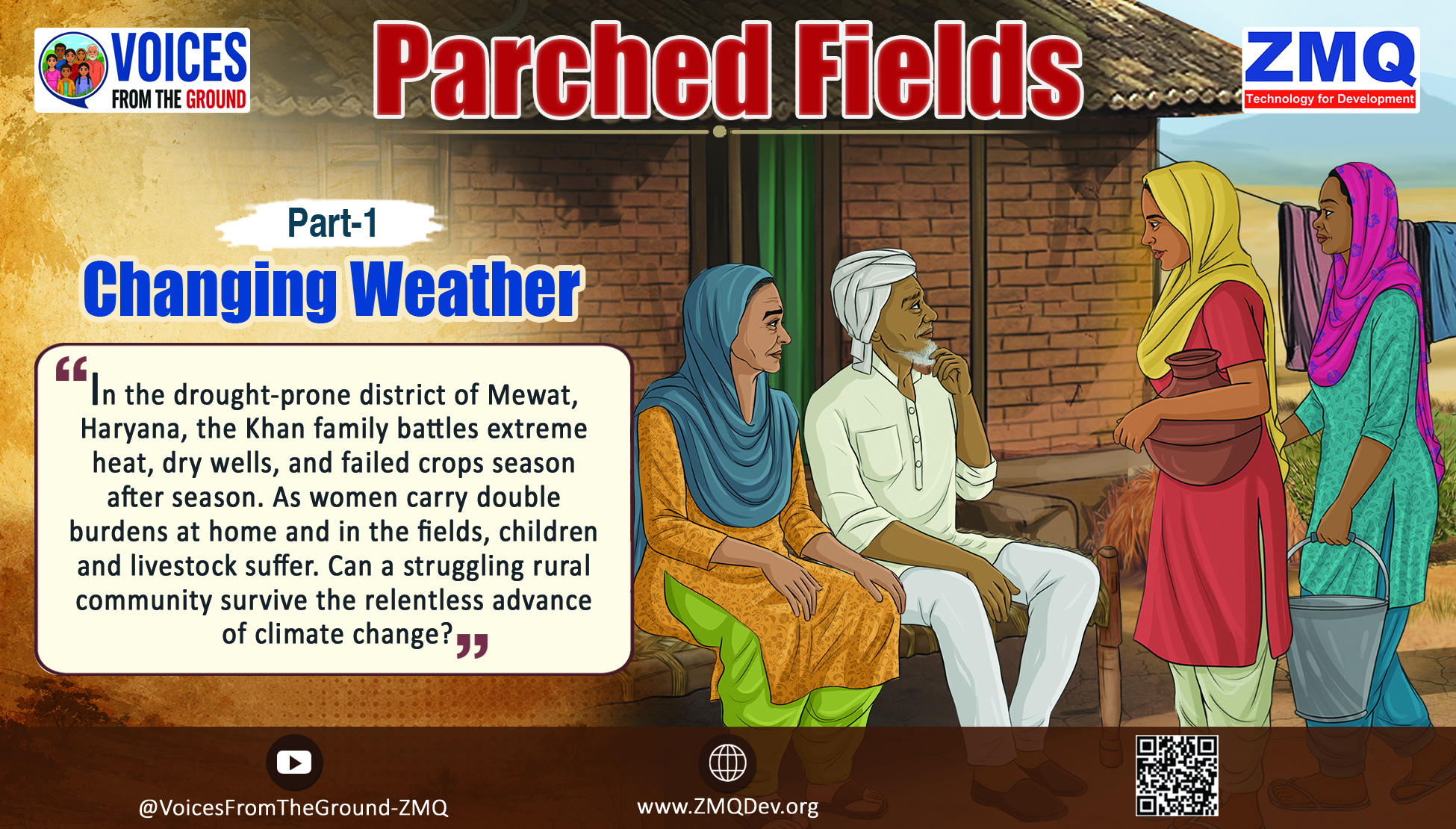
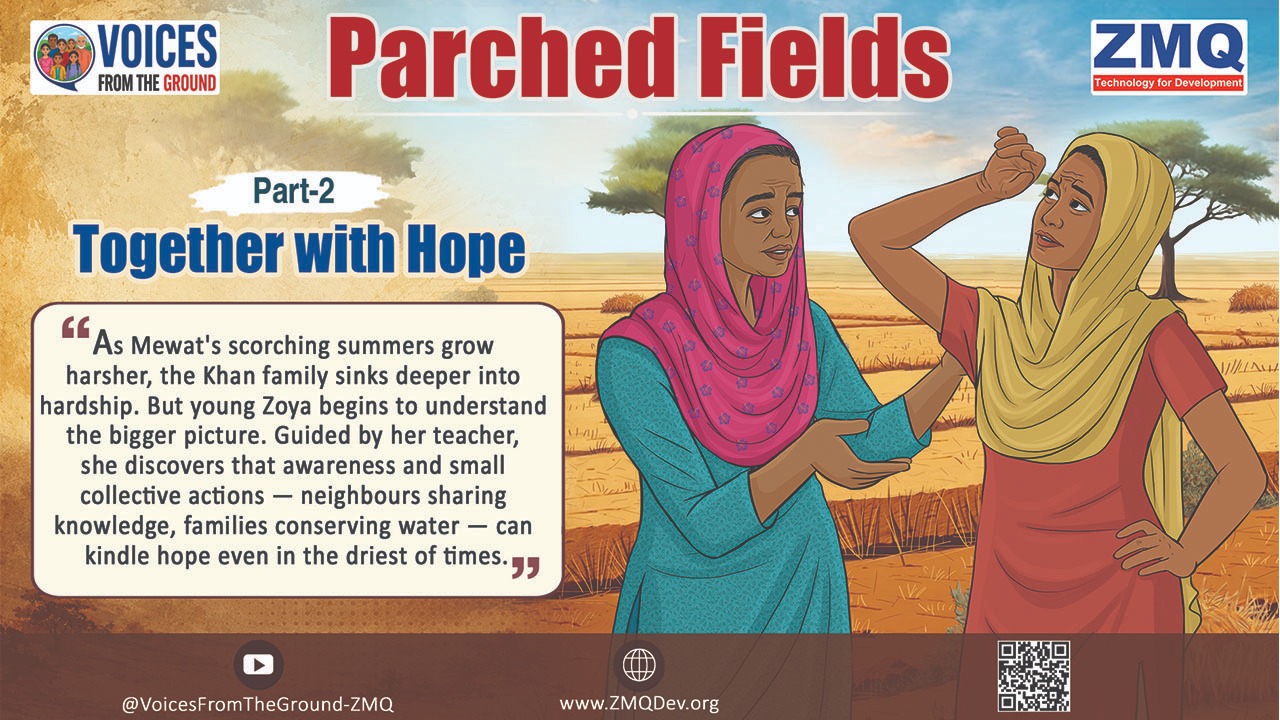
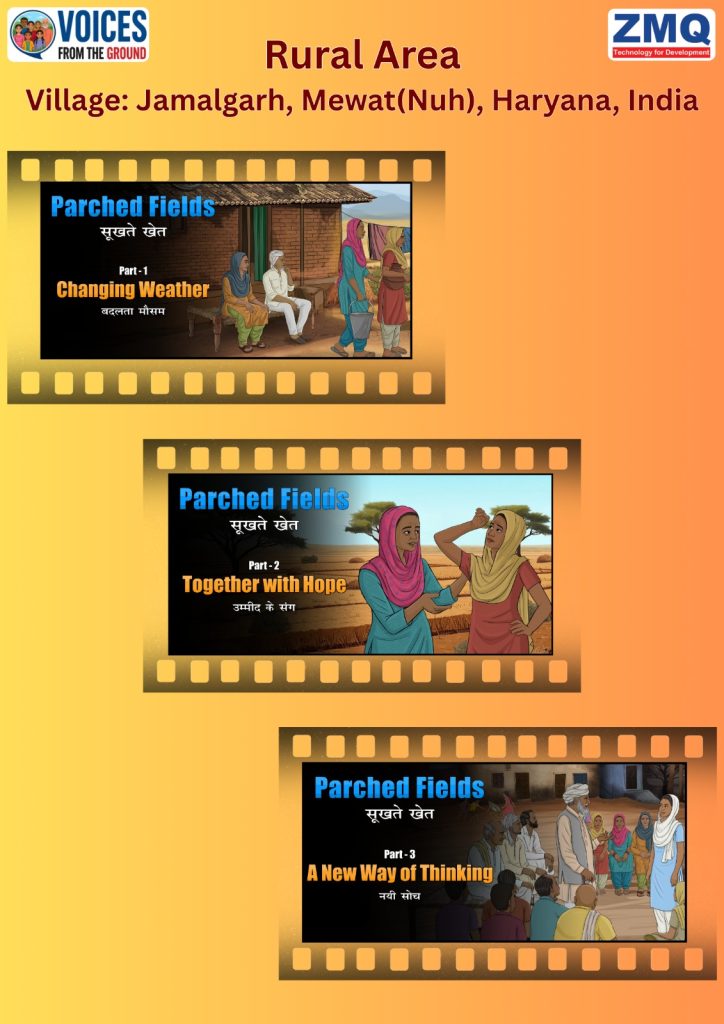
Parched Fields
When the Wells Run Dry
Part I: Changing Weather
Part II: Together with Hope
Part III A New Way of Thinking
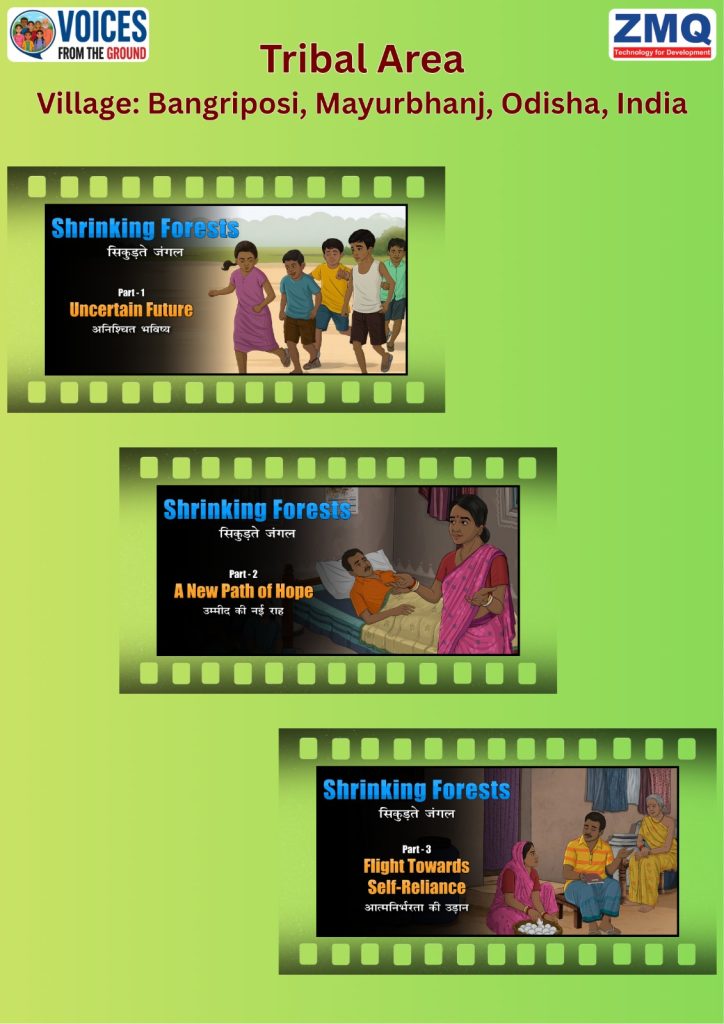
Shrinking Forests
When the Trees Fall Silent
Part I: Uncertain Future
Part II: A New Path of Hope
Part III Flight Towards Self-Reliance
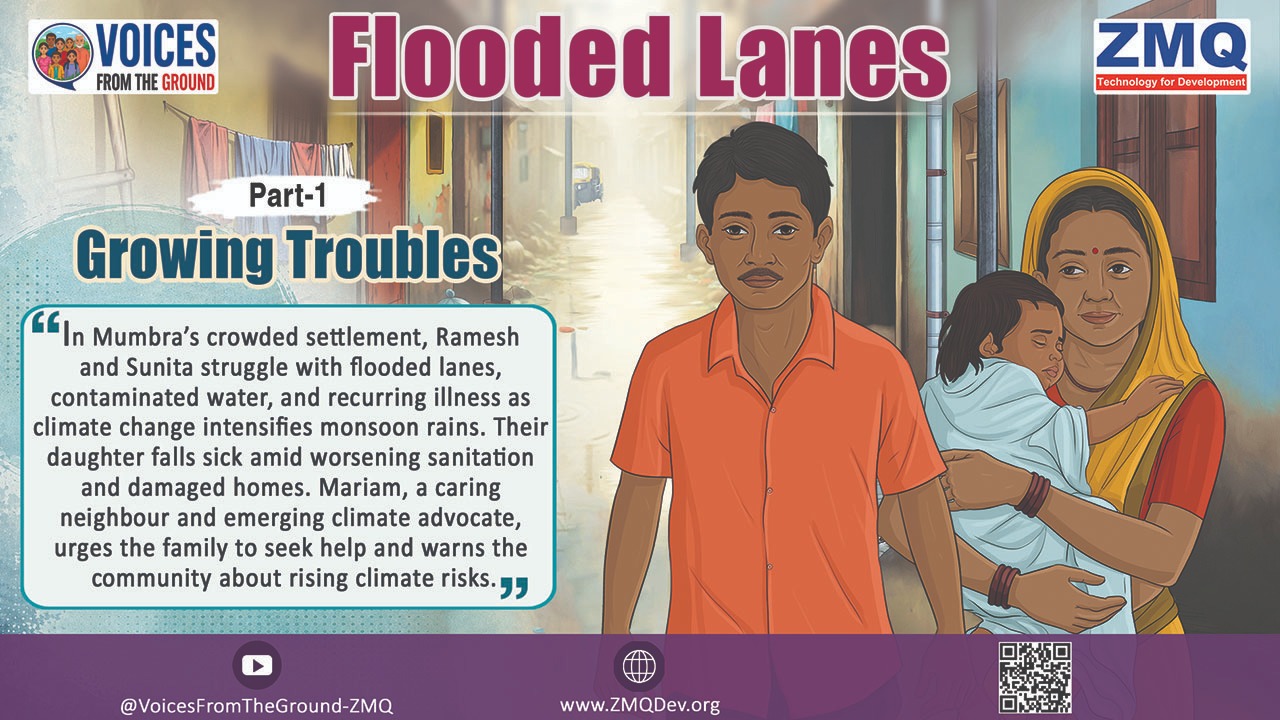
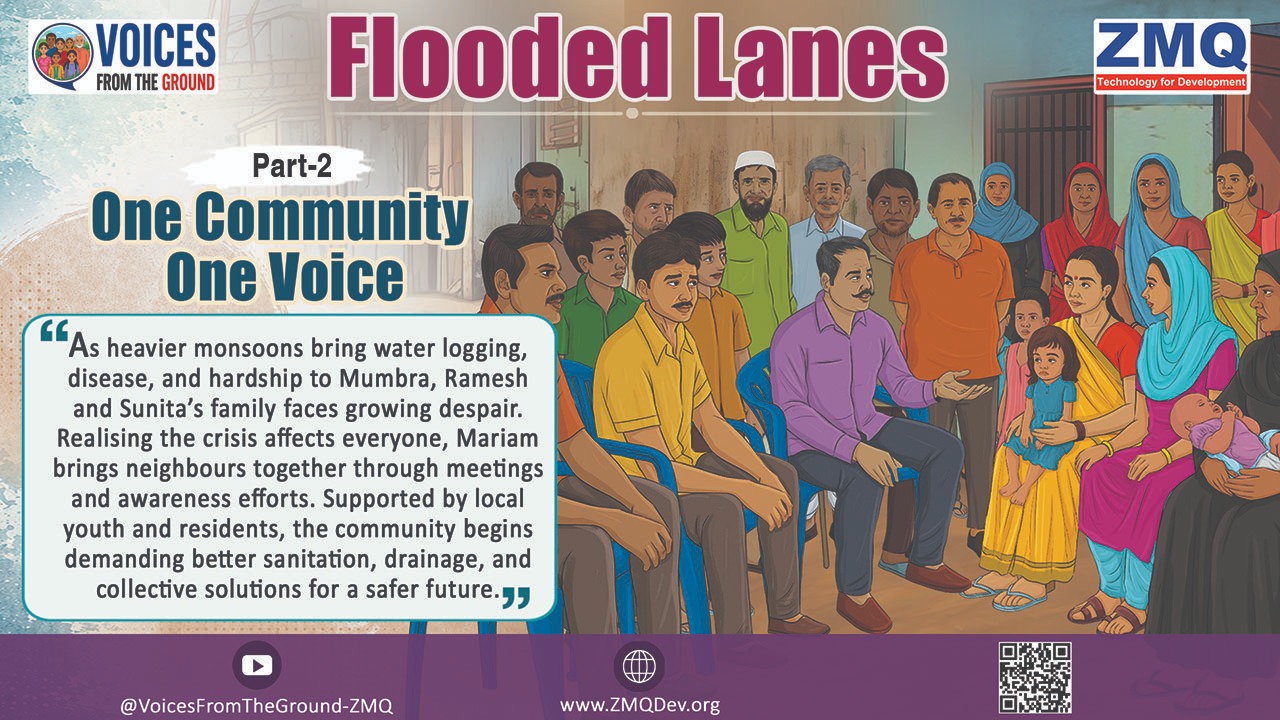
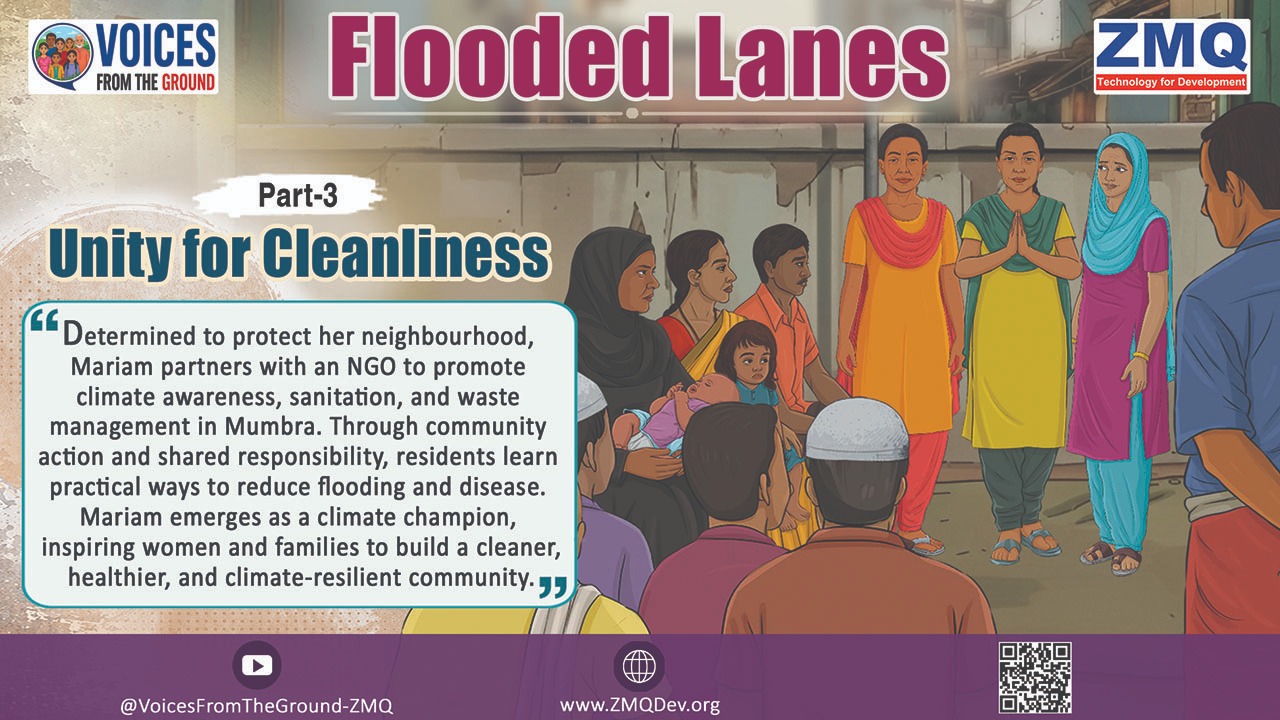
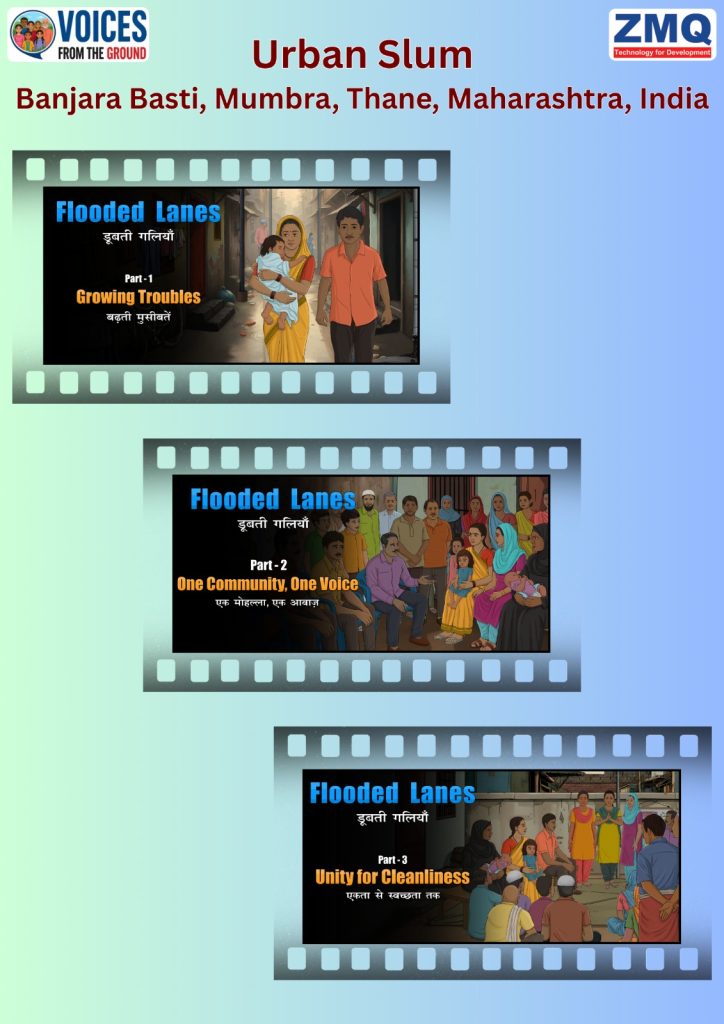
Flooded Lanes
When the Drains Overflow
Part I: Growing Troubles
Part II: One Community One Voice
Part III Unity for Cleanliness
ZMQ Development
ZMQ Development: Off # 1005, 10th Floor, First Tower, Pearls Omaxe Building, Netaji Subhash Place Complex - Pitampura, Delhi – 110034, INDIA
ZMQ Global: #401, 417 Saint Pierre Streat, Montreal, Quebec, CANADA
Qaff Africa Foundation Ltd.: 2nd Floor, UNMU Building, Mulago Upper Hill Road, Kampala, UGANDA