this for escaping w3 validation warning
hide
ZMQ’s Childhood Pneumonia initiative is a digital SBCC-led program designed to reduce preventable child deaths by improving early recognition, timely care-seeking, and effective case management for pneumonia among children under five. Childhood pneumonia remains one of the leading causes of under-five mortality in India, particularly in low-resource and low-literacy settings where caregivers often fail to recognize danger signs such as fast or difficult breathing.
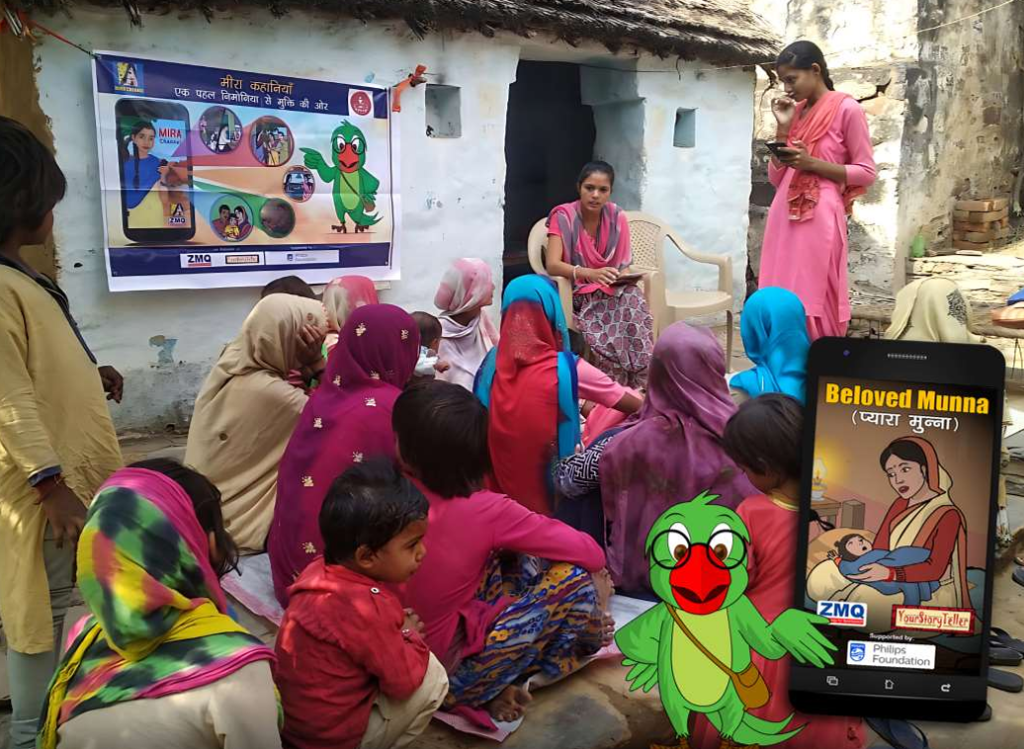
To address this gap, ZMQ partnered with Philips Foundation, Ashoka, Save the Children, and government health systems to integrate digital storytelling with mHealth-based case management through its flagship MIRA Channel. The program uses locally contextualized “Talking Comics” in regional languages to simplify complex health information and enable quick understanding among rural women and caregivers. These stories focus on the PPT model—Precaution, Prevention, and Treatment—with a strong emphasis on pneumococcal conjugate vaccine (PCV), nutrition, danger sign identification, and timely referral.
Alongside awareness creation, the program deploys a digital case-finding and management model aligned with national guidelines, enabling door-to-door screening, referrals, follow-ups, and service linkage. Community dissemination is strengthened through MIRA Theatres, group sessions, and counselling labs, ensuring engagement across caregivers, frontline health workers, and providers. Built-in analytics such as pre- and post-tests and KAP tracking support continuous learning and program refinement.
Key Activities
ZMQ Development
ZMQ Development: Off # 1005, 10th Floor, First Tower, Pearls Omaxe Building, Netaji Subhash Place Complex - Pitampura, Delhi – 110034, INDIA
ZMQ Global: #401, 417 Saint Pierre Streat, Montreal, Quebec, CANADA
Qaff Africa Foundation Ltd.: 2nd Floor, UNMU Building, Mulago Upper Hill Road, Kampala, UGANDA